


 Chat Wao
Linear Sliders: The Precision Motion Essentials for Modern Automation
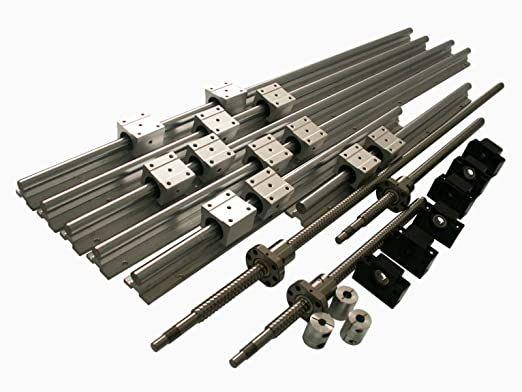
In the world of industrial automation, robotics, and precision manufacturing, the ability to control movement with accuracy, stability, and efficiency is non-negotiable. Whether it’s a CNC machine carving intricate metal parts, a robotic arm assembling microchips, or a 3D printer layering materials with micron-level precision, all these systems rely on a critical yet often overlooked component: the linear slider. Linear sliders are the unsung heroes of linear motion systems, providing the smooth, guided movement that enables machines to perform tasks with repeatability and reliability. This article explores what linear sliders are, how they work, their key advantages, types, applications, and why they’re essential for modern engineering.
What Are Linear Sliders?
A linear slider (also called a linear guide slider, carriage, or block) is a core component of a linear motion system that moves along a fixed rail or track. It is designed to carry loads (tools, workpieces, or robotic arms) while maintaining precise alignment and minimizing friction. The slider typically houses recirculating rolling elements—such as balls or rollers—that interact with the rail’s raceways to facilitate smooth, low-friction motion.
Think of a linear slider as the “moving part” of a linear guide system. It attaches to the load you want to move (e.g., a CNC toolhead or a robotic end-effector) and glides along a linear rail (the fixed track). The combination of the slider and rail creates a system that enables controlled linear movement with high precision and durability.
How Do Linear Sliders Work?
The magic of linear sliders lies in their rolling mechanism. Here’s a simplified breakdown:
- 1.
Rail and Slider Assembly: The linear rail is mounted to a fixed frame (e.g., a machine bed or gantry), while the slider is attached to the moving component (e.g., a tool or robotic arm).
- 2.
Rolling Elements: Inside the slider, precision-engineered balls or rollers are arranged in a recirculating path. These elements sit between the slider and the rail’s raceway (the grooved track).
- 3.
Motion: When force is applied (e.g., via a motor or actuator), the rolling elements roll along the rail’s raceway, allowing the slider to glide smoothly along the rail. The recirculating design ensures continuous motion without interruption.
This system is engineered to maintain precise alignment even under heavy loads or dynamic forces (like acceleration/deceleration). The rolling elements distribute the load evenly, preventing localized stress that could cause wear or misalignment.
Key Advantages of Linear Sliders
Linear sliders offer several benefits that make them indispensable in modern automation:
- 1.
High Precision & Repeatability
Linear sliders can achieve tolerances as tight as ±0.001mm (micron-level accuracy), ensuring that every movement is consistent and reproducible. This is critical for applications like semiconductor manufacturing, where components are assembled with nanometer-scale precision.
- 2.
Low Friction & Smooth Motion
The rolling contact between the slider’s balls/rollers and the rail’s raceways reduces friction by up to 90% compared to sliding bearings. This results in smoother motion, faster speeds, and longer component life.
- 3.
High Load Capacity
Linear sliders are designed to support heavy loads (up to 200,000N or more) without compromising performance. They can handle both radial (perpendicular to the rail) and axial (along the rail) forces, making them versatile for various industrial applications.
- 4.
Rigidity & Stability
Even under dynamic loads, linear sliders maintain their alignment, preventing deflection or wobble. This is crucial for tasks like CNC machining, where even slight misalignment can lead to defective parts.
- 5.
Durability & Long Service Life
Made from hardened steel and often coated for corrosion resistance, linear sliders are built to withstand harsh industrial environments, heavy use, and frequent cycling with minimal maintenance.
- 6.
Versatility
Linear sliders come in various sizes, configurations, and materials (e.g., steel, stainless steel, aluminum) to suit different applications, from compact 3D printers to large industrial robots.
Types of Linear Sliders
Linear sliders are categorized based on their design and application:
- 1.
Ball Sliders (Most Common)
- •
Rolling Elements: Steel balls.
- •
Best For: General industrial automation, CNC machines, 3D printers.
- •
Advantages: Balanced performance, cost-effective, widely available.
- •
Load Capacity: Medium to high (up to 100,000N per slider).
- •
- 2.
Roller Sliders (High Load Capacity)
- •
Rolling Elements: Cylindrical rollers.
- •
Best For: Heavy-duty machinery, industrial presses, large CNC routers.
- •
Advantages: Superior load capacity and rigidity.
- •
Load Capacity: Very high (up to 200,000N per slider).
- •
- 3.
Miniature Sliders
- •
Best For: Medical devices, precision instruments, electronics assembly.
- •
Advantages: Compact size, high precision in confined spaces.
- •
Load Capacity: Low to medium (up to 1,000N).
- •
- 4.
Crossed Roller Sliders (Ultra-High Precision)
- •
Rolling Elements: Alternating rollers at 90° angles.
- •
Best For: Semiconductor manufacturing, optical alignment, metrology.
- •
Advantages: Zero play, exceptional accuracy.
- •
Load Capacity: Medium (up to 15,000N).
- •
- 5.
Preloaded Sliders
- •
Best For: High-precision applications requiring zero backlash.
- •
Advantages: Enhanced rigidity, improved positioning accuracy.
- •
Implementation: Internal preload mechanisms (springs, shims).
- •
Applications of Linear Sliders
Linear sliders are used in a wide range of industries:
- 1.
CNC Machining & Manufacturing
- •
Applications: CNC mills, lathes, routers.
- •
Requirements: High precision, heavy load capacity.
- •
Solution: High-precision linear sliders.
- •
- 2.
3D Printing & Additive Manufacturing
- •
Applications: Print head movement, build platform positioning.
- •
Requirements: Smooth motion, moderate precision.
- •
Solution: Ball sliders or miniature sliders.
- •
- 3.
Robotics & Automation
- •
Applications: Robotic arms, pick-and-place machines.
- •
Requirements: Precise, repeatable motion.
- •
Solution: Configurable linear slider systems.
- •
- 4.
Medical & Laboratory Equipment
- •
Applications: Surgical robots, diagnostic devices.
- •
Requirements: High precision, cleanliness.
- •
Solution: Stainless steel or miniature sliders.
- •
- 5.
Aerospace & Defense
- •
Applications: Satellite positioning, precision instrumentation.
- •
Requirements: Reliability in extreme conditions.
- •
Solution: Specialized linear sliders.
- •
Selection Criteria for Linear Sliders
When choosing a linear slider, consider:
- 1.
Load Requirements (Static & Dynamic)
- 2.
Precision & Repeatability Needs
- 3.
Speed & Acceleration Limits
- 4.
Environmental Conditions
- 5.
Mounting Space & Orientation
- 6.
Maintenance & Lubrication Requirements
Installation & Maintenance Best Practices
- •
Precision Alignment: Ensure the slider and rail are perfectly parallel.
- •
Proper Lubrication: Use grease or oil based on speed and load.
- •
Regular Inspection: Check for wear or misalignment.
- •
Contamination Control: Keep the rail and slider clean.
Conclusion
Linear sliders are a cornerstone of modern precision engineering, offering unmatched performance in load capacity, accuracy, and durability. By understanding their design, types, and applications, engineers can select the right sliders for their needs. For more insights, visit YH Linear Newsor explore solutions at YH Linear.

 English
 Arabic
 French
 Spanish
 Portuguese
 Deutsch
 Dutch
Dutch
 Italiano
 Russian
 Romaian
 Portuguese (Brazil)
 Greek
Greek