


The Rubber Salt Bath Curing Production Line (LCM) is a specialized system designed to streamline the curing process for rubber products. It provides a controlled environment that enhances efficiency, consistency, and product quality in industrial rubber manufacturing.
At its core, the LCM system uses a salt bath method to transfer heat uniformly to rubber items. The bath, typically composed of molten salts, allows precise temperature control, ensuring that rubber products cure evenly. This method minimizes the risk of defects, such as uneven vulcanization or surface imperfections, which can occur with other heating techniques.
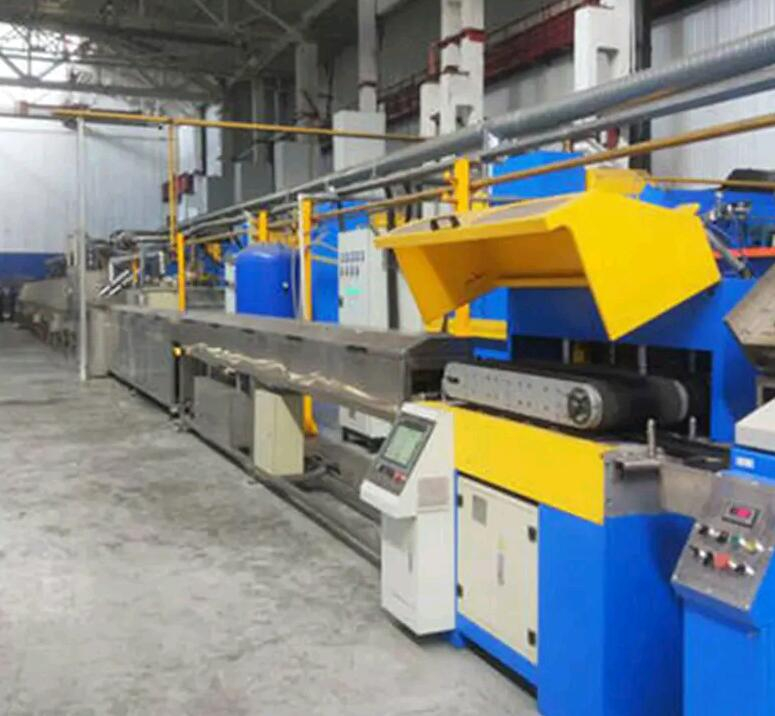
The production line is typically composed of feeding, heating, curing, and discharging sections, connected to allow continuous operation. Rubber items are loaded onto carriers or trays, which pass through the salt bath at a controlled speed. The system’s automation reduces manual handling, improving safety and reducing labor costs.
Another significant advantage of the LCM line is its flexibility. It can accommodate various rubber types and product sizes, from small components to larger items, making it suitable for diverse manufacturing needs. Operators can adjust temperature and curing time according to the specific material, ensuring consistent quality across batches.
Maintenance and operational efficiency are also important considerations. Many LCM systems include features for easy cleaning of the salt bath and mechanisms for recycling heat, enhancing energy efficiency and reducing operating costs.
zjbaina.com/product/rubber-salt-bath-curing-production-line-lcm/rubber-salt-bath-curing-production-line-lcm.html
The new generation of salt bath vulcanization line of BAINA has unique advantages in producing rubber strips for automobile industry and construction industry: high efficiency and low energy consumption.
The BAINA salt bath production line (LCM)is designed with compact combination. Its prominent feature is that the waste salt produced after the initial purification of the adhesive strip is very low. It uses modem computers to handle production control systems including pressure control and remote data transmission. The automatic brine recycling system avoids environmental pollution from wastewater. The entire production line includes the vulcanizing conveyor, cooling and washing unit, traction, cutting and winding device.