In the realm of mechanical engineering and automation, linear tracks play a crucial role in enabling precise and controlled linear motion. They serve as the guiding pathway for a variety of moving elements, from carriages and slides to robotic arms and cutting tools. Understanding the different types of linear tracks, their key features, and how to select and maintain them is essential for engineers and designers seeking to optimize their systems. This article provides a comprehensive exploration of linear tracks, covering their types, applications, selection criteria, installation guidelines, and maintenance best practices. I will also incorporate relevant information from the Yinhe Linear news page (
https://yhlinear.com/news/yinhe-news), adapting the concepts of linear bearings, rails, and guides to the specific context of linear tracks.
What are Linear Tracks? Defining the Core Function
Linear tracks are mechanical components designed to provide a defined pathway for linear motion. They typically consist of a track or rail along which a carriage, slide, or other moving element travels. The primary function of a linear track is to constrain the motion of the moving element to a single axis, ensuring that it moves along a straight line with minimal deviation. This precise guidance is critical for applications requiring accuracy, repeatability, and stability.
Linear tracks often incorporate rolling elements, such as ball bearings or rollers, to minimize friction and provide smooth, efficient motion. The design and materials used in the construction of linear tracks are crucial to their performance and longevity.
Types of Linear Tracks
There are several primary types of
linear tracks, each with its own advantages and disadvantages:
- Profiled Rail Tracks: These tracks feature a profiled rail with precisely machined grooves or channels that guide the movement of the carriage. They offer high load capacity, rigidity, and accuracy, making them ideal for demanding applications.
- Round Rail Tracks: These tracks consist of a hardened and ground round shaft that serves as the guiding surface. They are typically used with linear ball bearings or bushings. Round rail tracks offer a simple and cost-effective solution for linear motion but may have lower load capacity and rigidity compared to profiled rail tracks.
- Dovetail Tracks: These tracks feature a dovetail-shaped rail and a mating carriage. They offer good stability and load capacity but typically have higher friction compared to rolling element tracks.
- V-Groove Tracks: These tracks feature a V-shaped groove that guides the movement of wheels or rollers. They are often used in conveyor systems and other material handling applications.
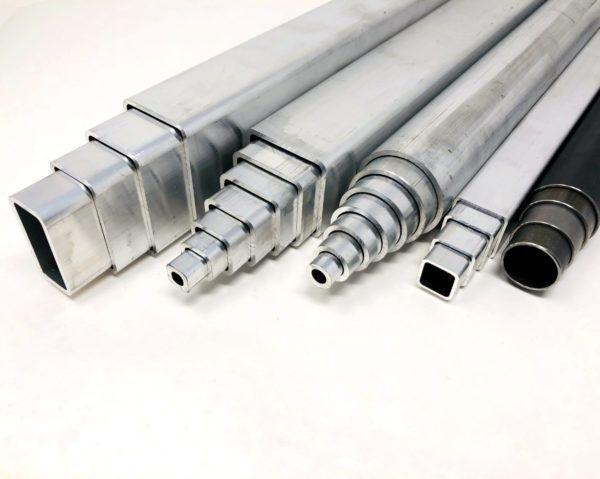
- Extruded Aluminum Tracks: These tracks are made from extruded aluminum profiles and can be customized to meet specific application requirements. They are lightweight, versatile, and easy to assemble.
Applications of Linear Tracks
Linear tracks are used in a diverse range of industries and applications, including:
- Automation: Linear tracks are essential components in automated assembly lines, packaging machines, and material handling systems, providing precise and controlled linear motion.
- Robotics: Linear tracks are used in robotic arms and linear actuators to provide accurate and repeatable movements.
- CNC Machines: Linear tracks are used to guide the movement of cutting tools and workpieces in CNC milling machines, lathes, and other machine tools.
- Medical Devices: Linear tracks are used in medical imaging equipment, surgical robots, and laboratory automation systems, where precision and reliability are critical.
- Aerospace: Linear tracks are used in aircraft control surfaces, landing gear actuators, and other aerospace applications where high performance and reliability are essential.
- Transportation: Linear tracks are used in railway systems, elevators, and other transportation applications.
Selecting the Right Linear Track
Choosing the right linear track for a specific application requires careful consideration of several factors:
- Load Capacity: The track must be able to support the applied load without deformation or failure.
- Accuracy: The required level of accuracy will dictate the type of track needed.
- Stiffness: The stiffness of the track will affect the amount of deflection under load.
- Speed: The maximum speed of the linear motion will affect the choice of track and the type of lubrication required.
- Environment: The operating environment, including temperature, humidity, and exposure to contaminants, will influence the selection of materials and coatings.
- Travel Length: The required travel length of the linear motion will determine the length of the track needed.
- Mounting: The track must be mounted securely to a rigid structure to prevent vibration and maintain accuracy.
- Cost: The cost of the track is an important consideration, but it should be balanced against the performance and reliability requirements of the application.



 Chat Wao

 English
 Arabic
 French
 Spanish
 Portuguese
 Deutsch
 Turkish
 Dutch
Dutch
 Italiano
 Russian
 Portuguese (Brazil)
 Greek
Greek