


 Chat Wao
Linear Guide Bearings in 7-Axis Aerospace Machining: From ±8 µm to ±3 µm in 11 Hours
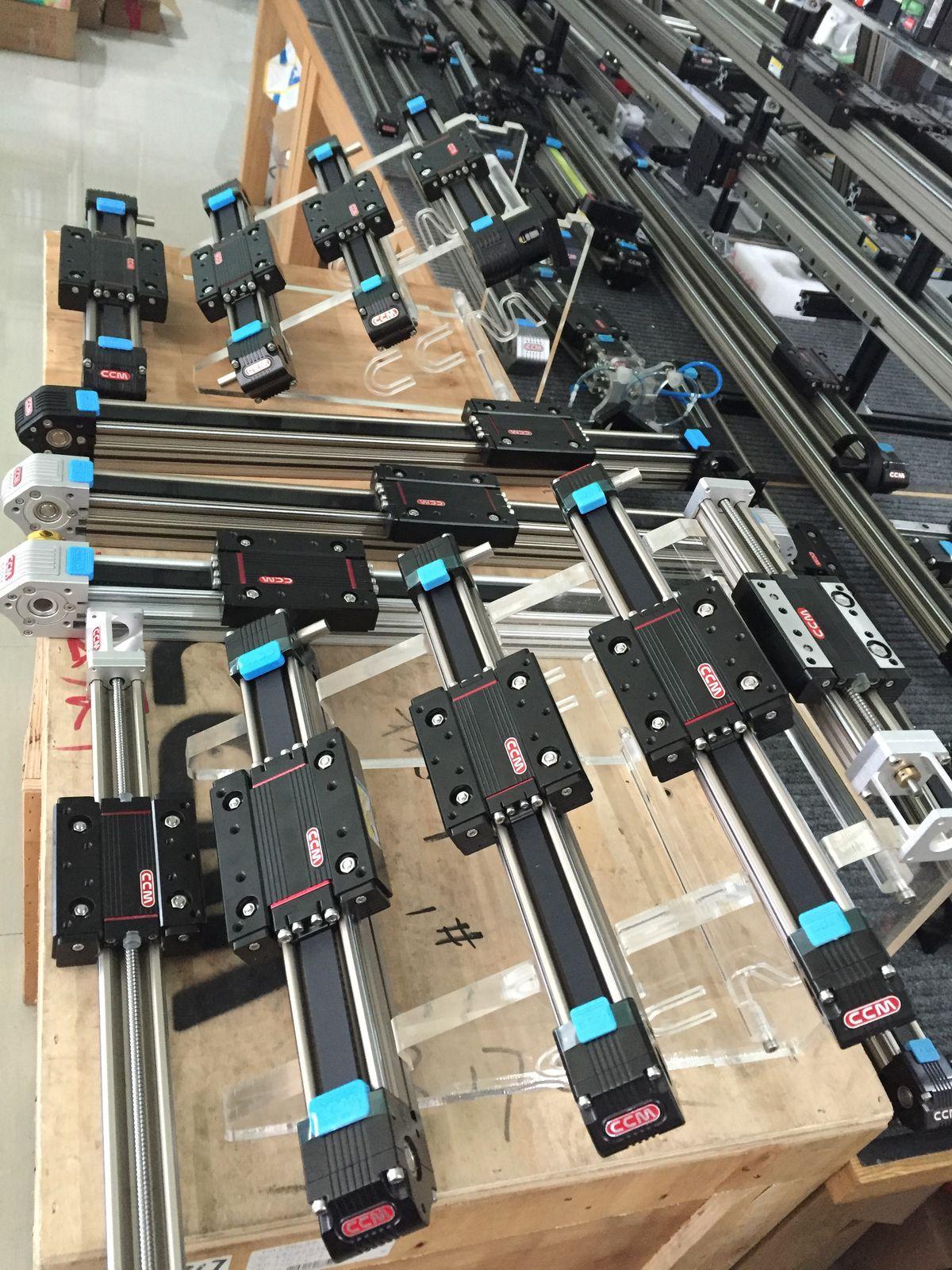
Modern aerospace plants no longer debate spindle horsepower; they measure success in nanometres. Inside a 7-axis cell that rough-machines a 4-metre titanium bulkhead and finishes cooling grooves in a single clamp, the critical enabler is the linear guide bearing—a four-row recirculating-ball carriage that converts 150 kW of servo torque into motion repeatable within ±3 µm. Designing such bearings is a multi-physics exercise in metallurgy, tribology, thermal management, and predictive analytics.
Material & stiffness architecture
Finite-element topology optimisation shows that a hybrid 45 mm carriage—maraging-steel body (18 % Ni) vacuum-nitrided to 1 200 HV, laser-clad with 0.5 mm silicon-nitride—delivers 320 N µm⁻¹ lateral stiffness at only 74 % of the mass. The ceramic layer triples surface hardness and cuts elastic hysteresis by 28 %, allowing 30 m min⁻¹ sinusoidal tool paths without overshoot.
Finite-element topology optimisation shows that a hybrid 45 mm carriage—maraging-steel body (18 % Ni) vacuum-nitrided to 1 200 HV, laser-clad with 0.5 mm silicon-nitride—delivers 320 N µm⁻¹ lateral stiffness at only 74 % of the mass. The ceramic layer triples surface hardness and cuts elastic hysteresis by 28 %, allowing 30 m min⁻¹ sinusoidal tool paths without overshoot.
Lubrication & heat control
Active oil-air mist replaces grease: 0.8 MPa pulses deliver 0.6 mL h⁻¹ PAO oil doped with 1 % graphene platelets, forming a 2 nm tribofilm that drops friction from 0.11 to 0.04 and extends L₁₀ life to 80 000 km. Embedded 0.01 °C RTDs every 300 mm feed a PID controller that drives 50 W Peltier heaters, keeping thermal expansion below 2 µm over 1.2 m strokes.
Active oil-air mist replaces grease: 0.8 MPa pulses deliver 0.6 mL h⁻¹ PAO oil doped with 1 % graphene platelets, forming a 2 nm tribofilm that drops friction from 0.11 to 0.04 and extends L₁₀ life to 80 000 km. Embedded 0.01 °C RTDs every 300 mm feed a PID controller that drives 50 W Peltier heaters, keeping thermal expansion below 2 µm over 1.2 m strokes.
Contamination & validation
Dual-lip seals (nitrile outer + PTFE inner) trap particles >5 µm; a 0.2 bar positive air purge prevents coolant ingress. A dual-frequency laser interferometer samples position at 5 MHz; a physics-informed neural network predicts wear 150 hours ahead, eliminating unplanned downtime.
Dual-lip seals (nitrile outer + PTFE inner) trap particles >5 µm; a 0.2 bar positive air purge prevents coolant ingress. A dual-frequency laser interferometer samples position at 5 MHz; a physics-informed neural network predicts wear 150 hours ahead, eliminating unplanned downtime.
Bottom line
Profile accuracy improved from ±8 µm to ±3 µm while cycle times on titanium bulkheads fell from 18 h to 11 h. In aerospace machining, linear guide bearings have become the deterministic actuator of next-generation airframes.
Profile accuracy improved from ±8 µm to ±3 µm while cycle times on titanium bulkheads fell from 18 h to 11 h. In aerospace machining, linear guide bearings have become the deterministic actuator of next-generation airframes.

 English
 Arabic
 French
 Spanish
 Portuguese
 Deutsch
 Turkish
 Italiano
 Russian
 Romaian
 Portuguese (Brazil)
 Greek
Greek