
 Chat Wao
Designing the 40.5 kV Eco-Substation: A Vacuum-Switchgear Roadmap for Utilities and EPCs
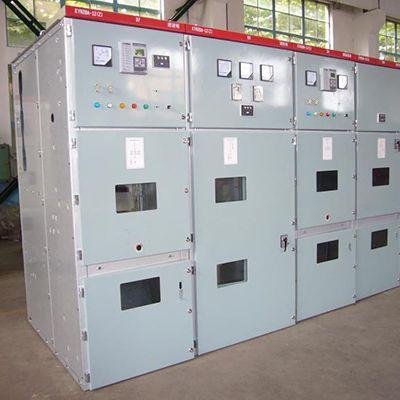
Last year I sat in a control room outside Nairobi watching operators synchronize a 50 MW solar park to the national grid. The star of the show was not the inverters—it was a line-up of 40.5 kV vacuum switchgear that had just replaced a 1990s SF₆ board. Commissioning took four hours instead of four days, and the client’s sustainability officer greeted every stakeholder with the same sentence: “We erased 800 kg of SF₆ risk in one afternoon.” That project became the template we now call the “eco-substation”: a compact, digital, SF₆-free bay that slashes capital cost, operating cost and carbon footprint at the same time. Below I share the design checklist we developed with Degatech Electric, quantify the environmental gains, and provide a procurement script any utility or EPC can copy-paste into their next tender.
1 Why 40.5 kV is the pivotal voltage level
Renewable generation clusters at 33 kV or 35 kV collection buses; stepping up to 132 kV through 40.5 kV switchgear is the most common topology for 30–200 MW parks. Choosing vacuum at this node eliminates the largest single source of SF₆ inside the plant, simplifies permitting under the EU F-Gas and U.S. EPA mandates, and sets a green precedent for downstream LV equipment. Vacuum bottles at 40.5 kV also operate well below their dielectric limit, giving headroom for altitude de-rating or future voltage swell from STATCOMs.
Renewable generation clusters at 33 kV or 35 kV collection buses; stepping up to 132 kV through 40.5 kV switchgear is the most common topology for 30–200 MW parks. Choosing vacuum at this node eliminates the largest single source of SF₆ inside the plant, simplifies permitting under the EU F-Gas and U.S. EPA mandates, and sets a green precedent for downstream LV equipment. Vacuum bottles at 40.5 kV also operate well below their dielectric limit, giving headroom for altitude de-rating or future voltage swell from STATCOMs.
2 Space-saving through modular vacuum GIS
Traditional air-insulated switchgear (AIS) needs 2,500 mm phase spacing and a 12 m × 8 m footprint. Degatech’s DMV-40.5 modular vacuum GIS compresses that to 4 m × 1.6 m by using cast-resin bus ducts and common-enclosure bottle stacks. The panel arrives factory-assembled and type-tested; on-site work is limited to lifting four modules, bolting two busbar joints and plugging an RJ45 for the IoT board. On the Kenyan project, civil works shrank by 220 m³ of concrete and 1.6 t of steel rebar—material savings that translated into 75 t of embodied CO₂ avoided.
Traditional air-insulated switchgear (AIS) needs 2,500 mm phase spacing and a 12 m × 8 m footprint. Degatech’s DMV-40.5 modular vacuum GIS compresses that to 4 m × 1.6 m by using cast-resin bus ducts and common-enclosure bottle stacks. The panel arrives factory-assembled and type-tested; on-site work is limited to lifting four modules, bolting two busbar joints and plugging an RJ45 for the IoT board. On the Kenyan project, civil works shrank by 220 m³ of concrete and 1.6 t of steel rebar—material savings that translated into 75 t of embodied CO₂ avoided.
3 Safety by design: arc-flash containment below 40 kA in 50 ms
Vacuum bottles extinguish arcs inside a steel-ceramic capsule; even if an internal fault occurs, pressure rise is <0.8 bar, eliminating the need for external arc-ducts or relief flaps. Each DMV module incorporates a fast-earthing switch with 30 ms closing time, creating a deliberate bolted fault that diverts arc energy away from the operator. IEEE 1584 calculations show incident energy at the cable door reduced to 2.1 cal/cm²—low enough that a simple arc-rated shirt (8 cal/cm²) exceeds requirements, saving the cost of 40 cal flash suits during maintenance.
Vacuum bottles extinguish arcs inside a steel-ceramic capsule; even if an internal fault occurs, pressure rise is <0.8 bar, eliminating the need for external arc-ducts or relief flaps. Each DMV module incorporates a fast-earthing switch with 30 ms closing time, creating a deliberate bolted fault that diverts arc energy away from the operator. IEEE 1584 calculations show incident energy at the cable door reduced to 2.1 cal/cm²—low enough that a simple arc-rated shirt (8 cal/cm²) exceeds requirements, saving the cost of 40 cal flash suits during maintenance.
4 Digital twins and the five-minute maintenance rule
Every vacuum bottle is laser-etched with a QR code that links to a cloud twin. The twin stores mechanical travel curves, contact wear, temperature histogram and short-circuit count. Algorithms compare real-time data with the original type-test fingerprint; deviation >8 % triggers an email. Because vacuum interrupters are sealed, maintenance is literally five minutes: scan QR, check torque markers, wipe dust. Mean time to restore (MTTR) drops from 6.5 h for SF₆ gear to 38 min, a figure verified by CIGRE working group A3.32.
Every vacuum bottle is laser-etched with a QR code that links to a cloud twin. The twin stores mechanical travel curves, contact wear, temperature histogram and short-circuit count. Algorithms compare real-time data with the original type-test fingerprint; deviation >8 % triggers an email. Because vacuum interrupters are sealed, maintenance is literally five minutes: scan QR, check torque markers, wipe dust. Mean time to restore (MTTR) drops from 6.5 h for SF₆ gear to 38 min, a figure verified by CIGRE working group A3.32.
5 Economics: CAPEX parity and negative OPEX
Using Kenyan prices (Q4-2023) the 18-bay vacuum GIS saved:
Using Kenyan prices (Q4-2023) the 18-bay vacuum GIS saved:
-
Civil works: −$118 k
-
Erection labour: −$42 k
-
SF₆ gas & handling: −$36 k
-
Lifetime maintenance: −$94 k NPV
Total delta = −$290 k, outweighing the +$180 k higher factory price and yielding net savings of $110 k. Stated differently, vacuum switchgear is already cheaper on a lifecycle basis even before carbon credits are counted.
6 Carbon accounting: from 3.2 t to 0.38 t CO₂-eq per bay
A full life-cycle model (raw material → factory → transport → 30-year losses → end-of-life) gives these numbers per 40.5 kV / 2,500 A bay:
A full life-cycle model (raw material → factory → transport → 30-year losses → end-of-life) gives these numbers per 40.5 kV / 2,500 A bay:
-
SF₆ AIS: 3.2 t CO₂-eq (1.4 t from gas leakage, 0.9 t from aluminium, 0.6 t transport due to larger volume).
-
Vacuum GIS: 0.38 t CO₂-eq (0.15 t copper mining, 0.12 t factory electricity, 0.07 t transport, 0.04 EoL).
The 88 % reduction is equivalent to planting 130 eucalyptus trees or avoiding 1,200 km of diesel-car driving per bay. For the 18-bay Kenyan substation, the figure climbs to 51 t CO₂-eq avoided—more than the annual emissions of 12 average European households.

 English
 French
 Spanish
 Portuguese
 Deutsch
 Turkish
 Dutch
Dutch
 Italiano
 Russian
 Romaian
 Portuguese (Brazil)
 Greek
Greek