


 Chat Wao
The Green Guardian: How Environmental-Friendly VCBs Are Redefining Grid Protection
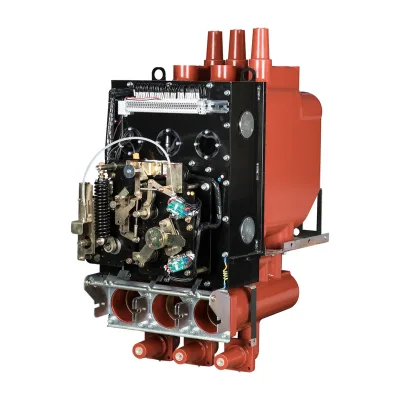
The global push for sustainability is reshaping every industry, and the electrical power sector is at the forefront of this transformation. While the focus often lands on renewable generation, the critical components that protect and control the grid are undergoing their own green revolution. Among these, the Vacuum Circuit Breaker (VCB) has emerged as a foundational technology for building an environmentally responsible electrical infrastructure. However, the concept of an "environmental-friendly VCB" extends beyond its core operating principle; it encompasses a holistic approach to design, manufacturing, and lifecycle management that minimizes ecological impact while delivering superior performance.
At its most fundamental level, a VCB is inherently more eco-friendly than its historical counterparts. For decades, circuit breakers relied on Sulfur Hexafluoride (SF6) gas or oil for insulation and arc quenching. SF6, while an excellent electrical insulator, is the most potent greenhouse gas known, with a global warming potential (GWP) 23,500 times that of carbon dioxide. Even minor leaks during maintenance or from end-of-life equipment contribute significantly to a utility's carbon footprint. In stark contrast, the vacuum interrupter in a VCB uses a high-vacuum environment to extinguish the electrical arc. This medium contains no greenhouse gases, presents zero risk of atmospheric contamination, and has a GWP of zero. This fundamental characteristic makes the adoption of SF6-free vacuum technology the most direct and impactful step utilities and industries can take to decarbonize their medium-voltage distribution assets.
But the environmental profile of a modern VCB goes deeper. Leading manufacturers are now implementing sustainable manufacturing practices in the production of vacuum interrupters and the overall assembly. This includes optimizing material usage to reduce waste, employing energy-efficient processes in the brazing and sealing of the interrupter, and selecting materials with lower embodied carbon. The longevity of the VCB itself is a key sustainability feature. A vacuum interrupter is typically sealed for life, with contact erosion so minimal that it can endure tens of thousands of operations without maintenance. This exceptional durability translates into a longer asset life, reducing the frequency of manufacturing replacements and the associated environmental costs of production and disposal.
The economic advantages are inextricably linked to this environmental performance. The total cost of ownership for green VCBs is significantly lower than for SF6 alternatives. The elimination of SF6 gas handling procedures removes the need for specialized gas carts, leak detection systems, and extensive training for personnel. It also eliminates the recurring cost of gas replenishment and the future liability of costly gas disposal at the end of the equipment's life. Furthermore, as governments worldwide implement carbon taxes and stricter regulations on F-gases, the financial advantage of owning a zero-GWP asset will only intensify. This makes the eco-friendly VCB not just an environmental choice, but a prudent financial one, future-proofing electrical infrastructure against escalating regulatory costs.
The reliability of vacuum technology further enhances its sustainability credentials. Unexpected outages caused by equipment failure lead to inefficient, polluting backup generators being brought online and disrupt the smooth integration of variable renewables. The proven reliability of maintenance-free vacuum interruption ensures higher grid availability and stability. This supports the broader integration of solar and wind power, creating a virtuous cycle where the protection system itself enables a greener grid.
Finally, at the end of its long service life, a VCB presents a simpler recycling and disposal challenge compared to SF6 equipment. There are no complex and costly procedures for gas recovery and destruction. The materials—primarily metals, ceramics, and plastics—are more straightforward to separate and recycle, supporting a circular economy model.
In conclusion, the environmental-friendly VCB is a paradigm of modern engineering, where ecological responsibility and operational excellence are perfectly aligned. It represents a mature, reliable, and economically sound technology that directly addresses the climate imperative without compromising on performance. For any organization committed to sustainability, from utility companies to industrial facilities, the transition to VCBs is a clear and actionable step. Partnering with a manufacturer that prioritizes this holistic view of environmental performance is crucial. Companies like Degatech Electric are dedicated to advancing this technology, offering a range of high-performance eco-VCBs that are designed and built for a sustainable future, providing customers with the assurance that their critical electrical protection is also protecting the planet.

 English
 Arabic
 Spanish
 Portuguese
 Deutsch
 Turkish
 Dutch
Dutch
 Italiano
 Russian
 Romaian
 Portuguese (Brazil)
 Greek
Greek