


 Chat Wao
The Anatomy of a Green VCB: Design Innovations Driving Sustainable Switchgear
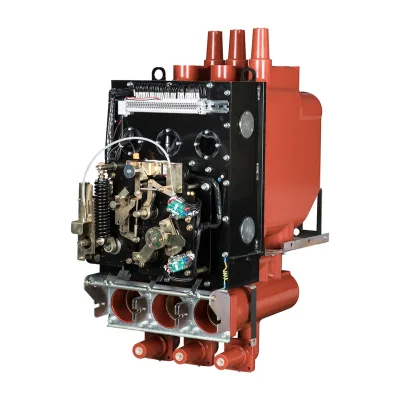
The term "environmental-friendly VCB" might seem straightforward, but the engineering reality behind it is a sophisticated interplay of physics, materials science, and design philosophy. A true green VCB is not defined by a single feature but by a series of deliberate choices throughout its design and construction that collectively minimize its environmental footprint from cradle to grave. Understanding these technical foundations is key for engineers and specifiers who seek to make genuinely sustainable choices for their electrical infrastructure, moving beyond marketing claims to substantive ecological benefits.
The heart of any VCB is the vacuum interrupter, and its design is the first frontier for environmental optimization. The quest for reduced material footprint drives innovation in interrupter design. Advanced computational modeling allows engineers to optimize the shape and mass of the critical internal components, particularly the contacts. By using high-strength, low-erosion contact materials like copper-chromium composites, manufacturers can create smaller, more efficient interrupters that require less raw material without sacrificing interrupting capacity or longevity. This precision contact engineering not only conserves resources but also contributes to the breaker's compact overall dimensions, enabling smaller switchgear panels and a reduced use of steel and other materials in the enclosure.
The internal environment of the interrupter is another area of focus. Maintaining a high vacuum is essential for performance and is inherently clean. However, the process of achieving and maintaining this vacuum has been refined for environmental benefit. The use of advanced, non-evaporable high-stability getter materials inside the interrupter ensures the vacuum integrity over decades of service. These getters actively absorb any residual gases that may be released from the internal materials over time, guaranteeing a consistent, high-performance vacuum without the need for external intervention or the risk of performance degradation that could lead to premature failure and waste.
Beyond the interrupter, the overall assembly of the circuit breaker incorporates eco-conscious material selection. This involves a deliberate move away from hazardous substances, in compliance with directives like RoHS (Restriction of Hazardous Substances). This means specifying alternatives for lead-based solders, cadmium coatings, and other potentially harmful materials that have been traditionally used in electrical components. Furthermore, the structural components and operating mechanisms are designed for durability and long-term reliability, ensuring the product's operational life is maximized. A breaker that lasts for 30 years instead of 20 has a dramatically lower lifetime environmental impact, amortizing the carbon cost of its manufacturing over a much longer period of service.
The concept of a green VCB also extends to its operational efficiency. While the breaker itself is not a continuous source of load loss like a transformer, its design influences system-wide efficiency. Low-energy operating mechanisms are a key innovation. Modern spring-charged mechanisms can be designed for high efficiency, requiring smaller motors and less energy to charge. Some advanced designs even incorporate kinetic energy recovery systems that capture energy during the closing operation to assist with the subsequent opening, further reducing the auxiliary power consumption. In a large substation with dozens of breakers, these incremental savings in energy use add up to a meaningful reduction in the facility's operational carbon footprint.
Finally, the synergy between the VCB and the wider switchgear is critical. A truly sustainable switchgear design is one that is built around the VCB, utilizing its compactness to create a smaller overall footprint. This reduces the amount of land required for a substation and the volume of concrete and steel needed for its construction. When this switchgear is also designed to be SF6-free and uses vacuum technology, the environmental benefit is compounded, creating a fully green assembly from the circuit protection to the primary insulation.
In conclusion, an environmental-friendly VCB is the product of intentional, multi-faceted engineering. It is a component where material efficiency, waste reduction, energy conservation, and longevity are prioritized at every stage of design. It represents a mature understanding that sustainability is not a single attribute but a systems-level outcome. For those specifying electrical equipment, this means looking beyond the datasheet and engaging with manufacturers who can demonstrate a deep commitment to these principles. Forward-thinking companies like Degatech Electric embed this philosophy into their R&D and manufacturing processes. Their next-generation VCB designs reflect a comprehensive approach to sustainability, ensuring that every breaker delivered not only performs its protective duty flawlessly but also serves as a benchmark for environmental responsibility in the power industry.

 English
 Arabic
 French
 Spanish
 Portuguese
 Deutsch
 Turkish
 Dutch
Dutch
 Italiano
 Russian
 Romaian
 Portuguese (Brazil)