


 Chat Wao
Medium Voltage Protection: Ensuring Grid Reliability and Safety
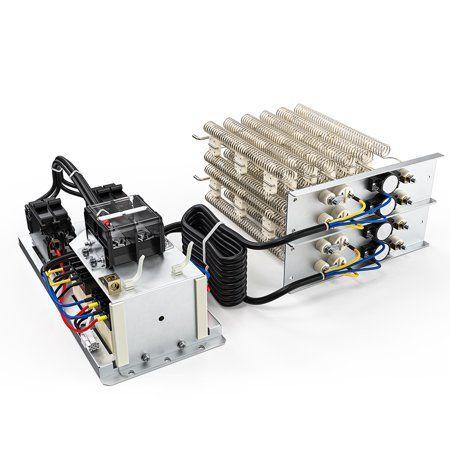
I. Why Medium Voltage Protection Matters
-
Short Circuits (phase-to-phase or phase-to-ground) -
Overcurrents (due to overload or equipment failure) -
Ground Faults (current leaking to earth) -
Arc Flashes (dangerous electrical explosions)
II. Key Components of Medium Voltage Protection
1. Protective Relays
-
Overcurrent Relays – Detect excessive current flow. -
Differential Relays – Compare currents at both ends of a line to detect internal faults. -
Distance Relays – Identify faults based on impedance measurements. -
Earth Fault Relays – Protect against ground faults.
2. Circuit Breakers (MV Range)
-
Vacuum Circuit Breakers (VCBs) – Most common for MV (up to 36 kV). -
SF₆ Circuit Breakers – Used in high-voltage applications (though being phased out). -
Air & Gas-Insulated Breakers – Alternative for specific environments.
3. Switchgear & Protection Panels
-
Metal-Clad Switchgear – Enclosed, modular design for safety. -
Ring Main Units (RMUs) – Compact protection for distribution networks. -
Protection Control Panels – House relays, meters, and control devices.
4. Current & Voltage Transformers (CTs & VTs)
-
Step down high MV signals to measurable levels for relays.
III. Types of Medium Voltage Protection Schemes
1. Feeder Protection
-
Protects power lines feeding loads (motors, transformers). -
Uses overcurrent, distance, and differential relays.
2. Transformer Protection
-
Differential Relays (detect internal faults). -
Buchholz Relays (for transformer internal faults like gas buildup). -
Overload & Temperature Protection.
3. Motor Protection
-
Overcurrent & Thermal Protection (prevent motor burnout). -
Earth Fault & Stalling Protection.
4. Busbar Protection
-
Differential Relays (detect faults in main busbars). -
Fast isolation to prevent system-wide outages.
IV. Advanced MV Protection Technologies
V. Best Practices for MV Protection
-
Proper Relay Coordination – Ensure selective tripping (only faulty section isolates). -
Regular Testing & Maintenance – Relay calibration, breaker testing, CT/VT checks. -
Arc Flash Risk Assessment – Proper PPE & fast protection schemes. -
Redundancy & Fail-Safes – Backup protection for critical systems. -
Compliance with Standards – IEC, IEEE, ANSI, and local regulations.

 Arabic
 French
 Spanish
 Portuguese
 Deutsch
 Turkish
 Dutch
Dutch
 Italiano
 Russian
 Romaian
 Portuguese (Brazil)
 Greek
Greek