


 Chat Wao
Running vs Starting Watts: The Critical Difference Most Generator Shoppers Ignore
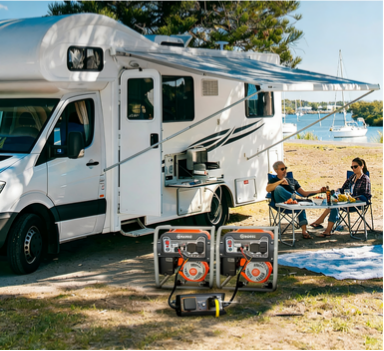
Shopping for a portable generator without understanding wattage ratings is a common, costly mistake. Many buyers grab a unit based solely on price or brand, only to discover it cannot power their refrigerator, RV air conditioner, or construction tools. Confusion between running watts and surge watts, plus miscalculations of simultaneous device loads, leads to overloaded circuits, tripped safety shutoffs, and even permanent damage to electronics and power equipment. Mastering simple wattage math lets you match generator capacity to your unique needs, whether you’re prepping for storm outages, road-tripping in an RV, camping off-grid, or running power tools on a remote job site.
First, it’s vital to separate the two core wattage metrics printed on every generator: running watts and starting (surge) watts. Running watts refer to the steady, continuous power a unit can deliver to keep appliances operating normally—this is the baseline load you must cover for all devices running at the same time. Starting watts are a short burst of extra power required to kickstart motor-driven equipment, including refrigerators, air conditioners, circular saws, and water pumps. These motors draw two to three times their standard running wattage for just a few seconds during startup, and if your generator’s surge rating cannot absorb this spike, it will overload and shut down automatically.
Calculating your total power demand follows three straightforward steps that apply to every use case. Step one: list every device you plan to operate simultaneously and note each one’s running wattage from its nameplate. For example, a home emergency setup might include a 150W refrigerator, 100W LED lighting bank, 80W router/laptop, and 300W sump pump, totaling 630 continuous running watts. Step two: identify the single largest motorized device on your list to account for its surge draw. A typical window AC unit needs an extra 1,200 surge watts on startup, which becomes your peak power requirement. Step three: add a 20–30% safety buffer to your total running watts. Operating a generator near its maximum capacity accelerates engine wear, raises fuel consumption, and increases overload risk; a buffer ensures smooth, long-term performance.
Different lifestyles and environments carry wildly different wattage requirements, and sizing logic shifts dramatically across four core scenarios. Weekend campers prioritizing lights, phone chargers, and a small cooler only need 1,800–2,300 running watts, as their loads are low-draw and rarely include large motors. RV owners face higher demand: an onboard air conditioner alone pulls 1,300–1,800 running watts, paired with microwaves, coffee makers, and TVs, pushing minimum continuous wattage to 3,300–3,500. Homeowners preparing for multi-day blackouts need to support refrigeration, heating devices, and well pumps, again landing in the 3,500-watt range for essential household gear. Construction job sites add power saws, drills, and electric chainsaws, whose combined motor surges demand robust surge wattage to avoid constant shutdowns mid-work.
For users whose power needs grow over time, parallel-ready generator technology solves the problem of overbuying a massive heavy unit upfront. Instead of purchasing a single oversized generator to cover rare high-load moments, you can start with a mid-size model and link a second matching unit later using a parallel kit to double total output. This scalable approach is ideal for RV travelers who occasionally host large groups, homeowners facing extended grid failures, or contractors who take on bigger jobs seasonally. It eliminates the waste of hauling a heavy, underutilized generator for everyday light-load use while reserving extra power capacity for peak-demand days.
Equally important to wattage math is prioritizing inverter generators for sensitive electronics. Standard open-frame generators produce unstable power with high harmonic distortion, which can fry laptops, televisions, and medical devices. Inverter technology generates clean pure sine wave power with minimal fluctuation, making it safe for delicate gadgets alongside heavy motor equipment. Paired with built-in overload protection and CO safety shutoff systems, properly sized inverter generators deliver reliable power without sacrificing safety or device longevity.
At the end of the day, generator sizing is not about buying the largest unit you can afford—it’s about matching capacity to your real daily loads. By breaking down running and surge wattage, accounting for simultaneous devices, and planning for future power expansion via parallel capability, you eliminate the frustration of underpowered generators and avoid wasting money on unnecessary excess capacity. Whether you’re prepping for emergencies, exploring the outdoors, or working remote, precise wattage calculation is the foundation of stress-free portable power.

 English
 Arabic
 Spanish
 Portuguese
 Deutsch
 Turkish
 Dutch
Dutch
 Italiano
 Russian
 Romaian
 Portuguese (Brazil)
 Greek
Greek