
 Chat Wao
Why PET Sheets Are Important for Electrical Insulation
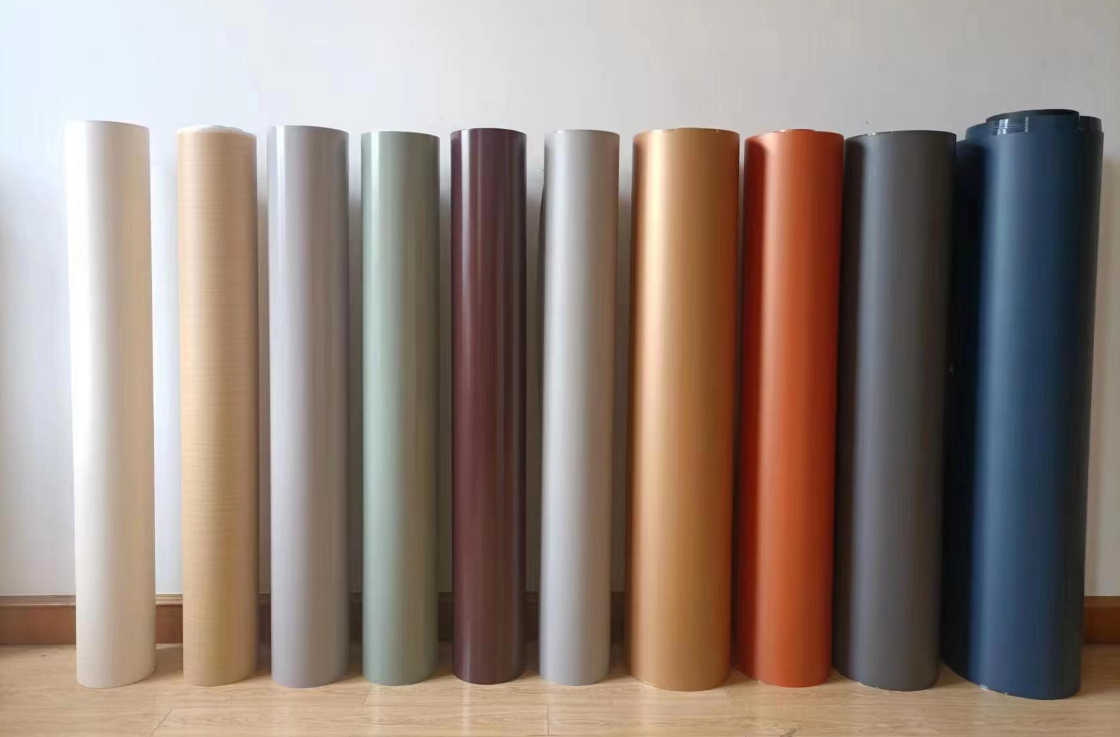
PET materials are selected for applications that require clarity, strength, and barrier properties.
Packaging and Containment
A primary function is in packaging. PET film (often referred to as Mylar, a brand name) is used for food packaging bags, snack food liners, and as a component in laminated structures for extended shelf life. Thermoformed PET sheets are used to make transparent clamshell containers, bakery trays, and blister packs for consumer goods, providing product visibility and protection.
Printing and Graphic Arts
PET film is a stable substrate for printing and imaging. It is used for overhead transparencies, durable outdoor signage, and as a backing for membrane switch graphics in electronic panels due to its dimensional stability and resistance to tearing. Thicker PET sheets can be used for point-of-purchase displays and protective menu covers.
Electrical Insulation and Technical Applications
PET film serves as an electrical insulator in capacitors, motor slot liners, and flexible printed circuits because of its good dielectric strength and thermal resistance. It is also used as a release liner in adhesive tapes and as a robust, clear layer in protective glazing for machinery guards and solar panel backsheets.
What is the internal design of PET Sheet/Film?
The performance of PET is a direct result of its internal chemical structure and physical orientation.
Molecular Structure and Crystallinity
At the molecular level, PET is a polymer chain formed from repeating units of ethylene glycol and terephthalic acid. These chains can be arranged in an amorphous (disordered) state or a crystalline (ordered) state. The manufacturing process controls this. Rapidly cooling extruded PET results in a clear, amorphous sheet. If the material is subsequently heated and stretched (oriented) in one or two directions, the polymer chains align, increasing crystallinity. This oriented PET (OPET) is stronger, stiffer, and has better barrier properties. The degree of crystallinity affects clarity, strength, and thermal resistance.
Physical Orientation and Layering
Many high-performance PET film is biaxially oriented (stretched in both the machine and transverse directions). This orientation aligns the polymer chains, dramatically improving tensile strength, stiffness, and dimensional stability. For specialized functions, PET is often used as part of a multilayer co-extrusion or laminate. A single PET layer may be too permeable to gases like oxygen for certain food packaging. Therefore, it is commonly combined with other materials (like polyethylene or aluminum) in a laminated structure, where the PET provides strength and printability, and another layer provides the seal or the high barrier.
What are the advantages of PET Sheet/Film?
PET offers a balanced profile of properties that make it a suitable choice for many engineering and packaging tasks.
Oriented PET film exhibits high tensile strength and tear resistance for its thin gauge, making it a tough packaging material. It is also dimensionally stable, meaning it resists stretching and shrinking with changes in humidity and temperature, which is critical for printing and electrical applications.
Clarity and barrier properties are significant advantages. PET can be produced with optical clarity, allowing for product visibility in packaging. It also provides a good barrier against gases (like oxygen and carbon dioxide) and moisture, which helps preserve the freshness of packaged foods and beverages, though it is not an absolute barrier on its own.
Chemical resistance and safety are notable. PET is resistant to many oils, greases, and dilute acids, making it suitable for food contact. It is approved by food safety agencies worldwide for direct food packaging. Furthermore, PET is a recyclable material, designated by resin identification code #Post-consumer PET (rPET) can be collected, processed, and reformed into new fibers, sheets, or containers, contributing to circular economy initiatives, though the closed-loop recycling of food-grade PET sheet back into food-grade sheet has specific technical requirements.

 English
 Arabic
 Spanish
 Portuguese
 Deutsch
 Turkish
 Dutch
Dutch
 Italiano
 Russian
 Romaian
 Portuguese (Brazil)
 Greek
Greek