
 Chat Wao
How Suspension Geometry Changes After Spring Replacement
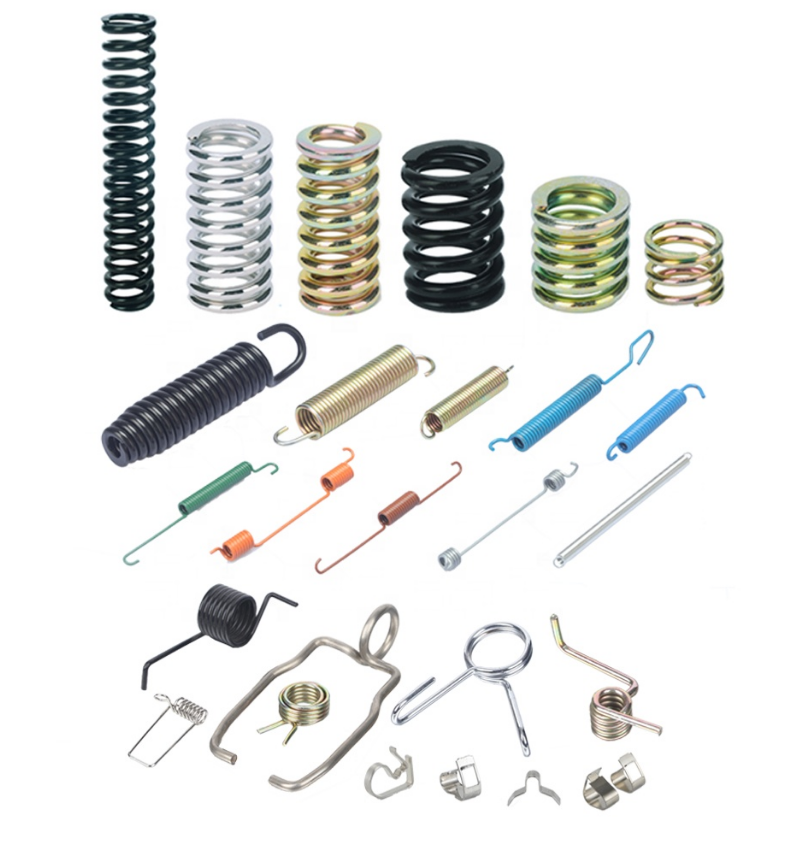
Selecting a coiled helical spring with an appropriate spring rate is a primary consideration. The spring rate, expressed in newtons per millimeter (N/mm), determines how much force is required to compress the spring by a given distance. When this rate does not align with the vehicle's gross vehicle weight rating (GVWR), several consequences emerge. An under-rated spring causes excessive sag, reducing ground clearance and altering suspension geometry, which negatively affects camber and toe angles. Conversely, an over-rated spring reduces suspension travel, leading to a stiff ride and diminished tire contact with uneven surfaces. Manufacturers specify spring rates based on axle loads, and aftermarket replacements must match these specifications precisely. Additionally, progressive-rate springs, where coil spacing varies, offer variable resistance but require careful pairing with dampers to avoid mismatched compression and rebound characteristics.
Fatigue Life And Material Degradation
Coiled helical springs operate under cyclic loading conditions, and their service life is defined by fatigue resistance. Each compression cycle induces tensile stresses along the inner diameter of the coil, where cracks typically initiate. Factors that accelerate fatigue include surface defects, inclusions in the steel, and inadequate shot peening. Shot peening induces compressive residual stress at the surface, which counters tensile stresses during operation. When this surface layer is compromised—through corrosion, stone impacts, or improper handling during installation—fatigue life diminishes significantly. Operators should inspect springs for visible pitting or coating damage at regular intervals, as failure tends to occur without extensive prior deformation. A spring that loses more than 5 percent of its free height due to permanent set should be replaced, as its load-bearing capacity has been permanently altered.
Corrosion Protection And Coating Integrity
The operating environment exposes coil springs to moisture, road salts, and debris. Protective coatings serve as the primary barrier against corrosion, which acts as a stress concentrator that reduces fatigue strength. Common coating systems include epoxy powder coating, cathodic electrodeposition, and zinc phosphating with a topcoat. Each system provides a different level of protection; epoxy coatings offer mechanical abrasion resistance but can chip when struck by road debris. Once the coating is breached, corrosion initiates at the exposed steel surface. In regions where de-icing salts are used, electrochemical corrosion accelerates, and rust pits can reduce the spring's effective cross-sectional area by 10 to 15 percent before visible failure occurs. Regular underbody washing to remove salt residue and periodic visual inspection for coating damage are practical measures to extend service life.
Installation And Suspension Geometry Alignment
Improper installation of coil springs affects vehicle dynamics beyond ride comfort. Coil springs are typically seated in upper and lower isolators made of rubber or polyurethane. These isolators reduce noise transmission and allow rotational movement during compression. If a spring is not correctly seated in its perches, it can bow under load, causing uneven stress distribution and premature failure. Furthermore, when springs are replaced, associated suspension components such as strut mounts, bump stops, and dampers should be assessed. A new spring paired with a worn damper results in uncontrolled oscillation, as the damper's damping coefficient is no longer matched to the spring's energy release rate. Alignment parameters also shift after spring replacement due to changes in ride height, necessitating a four-wheel alignment to restore manufacturer specifications.
Material Behavior At Sub-Zero Temperatures
Coiled helical springs manufactured from standard high-carbon spring steels, such as SAE 9254, exhibit changes in mechanical properties when exposed to low temperatures. As ambient temperature drops below -20°C, the steel's yield strength increases marginally, but its fracture toughness decreases. This shift means that while the spring can support static loads without issue, its ability to withstand impact loads—such as striking a pothole or traversing a frozen rut—is reduced. Brittle fracture becomes a concern if pre-existing surface defects or microcracks are present. Manufacturers typically specify a service temperature range for standard spring steels, and vehicles operating in regions where temperatures fall below -30°C may require springs made from low-alloy steels with improved low-temperature toughness.

 English
 Arabic
 French
 Portuguese
 Deutsch
 Turkish
 Dutch
Dutch
 Italiano
 Russian
 Romaian
 Portuguese (Brazil)
 Greek
Greek