


 Chat Wao
How Natural Materials Transform Disposable Dining Products
1. Material Composition
The materials used to make biodegradable tableware define its performance, durability, and decomposition characteristics.
Plant-based fibers
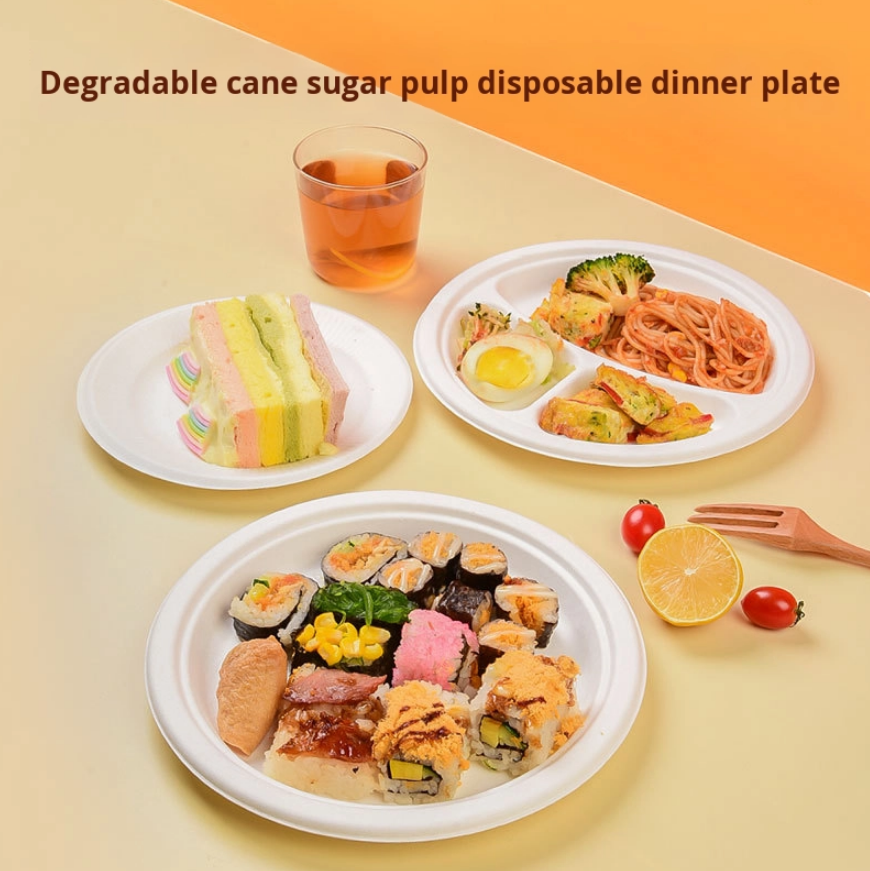
Many biodegradable plates and bowls are made from sugarcane bagasse, which is a by-product of sugar extraction. Bagasse is pressed and molded into tableware, producing sturdy items suitable for both hot and cold food. For example, food service providers often use bagasse plates for buffet meals or catering events because they resist moisture and heat for the duration of a meal.
Starch-based plastics
Cornstarch or potato starch can be processed into bioplastics, forming cups, cutlery, or packaging materials. These products resemble conventional plastic in appearance but are compostable under industrial conditions. Coffee shops sometimes provide cornstarch cups for hot beverages, offering a visually similar alternative to polyethylene-lined paper cups.
Other plant-derived materials
Bamboo, wheat bran, and palm leaves are also used for tableware. Bamboo plates and cutlery combine strength with a natural aesthetic, while palm leaf plates can be molded into various shapes without additional chemicals. In many picnic settings, palm leaf plates serve as disposable alternatives to plastic trays.
The choice of material affects strength, heat resistance, water absorption, and biodegradation rate, which are key factors for practical use.
2. Environmental Benefits
Biodegradable tableware is designed to reduce environmental impact compared to conventional disposable items.
Reduced plastic pollution
By substituting plastics with plant-based materials, biodegradable tableware decreases the accumulation of non-degradable waste in landfills and oceans. In urban areas, restaurants that adopt biodegradable tableware contribute less to microplastic contamination in waterways.
Compostability
Many biodegradable products can break down into organic matter under proper composting conditions. For instance, sugarcane bagasse plates can decompose in industrial composting facilities within a few months, turning into soil-enriching material.
Lower carbon footprint
Plant-based raw materials often have a smaller carbon footprint than petroleum-based plastics. Producing biodegradable tableware from agricultural by-products uses materials that would otherwise be discarded, contributing to resource efficiency.
Although biodegradable tableware reduces certain environmental pressures, proper disposal is necessary to ensure effective decomposition, as these items may not degrade efficiently in conventional landfills.
3. Production And Design
The manufacturing process and product design of biodegradable tableware influence its usability and market adoption.
Molding and shaping
Bagasse and bamboo fibers are typically steamed, pressed, and molded into plates, bowls, and trays. Cornstarch-based bioplastics are cast or extruded into cups and utensils. These methods allow for consistent size, thickness, and strength suitable for food service.
Heat and moisture resistance
Proper design ensures that biodegradable tableware withstands typical food service conditions. For example, a bagasse plate can hold hot pasta or soup without warping, while cornstarch utensils may be coated with a thin layer to improve durability when handling moist food.
Aesthetic options
Biodegradable tableware can be designed with natural textures or colored with non-toxic dyes. Some companies produce patterned plates or custom-branded cups for events, combining functionality with visual appeal.
Manufacturers aim to balance cost, strength, and environmental compliance while producing items that meet both commercial and consumer expectations.
4. Usage Scenarios
Biodegradable tableware is applied in a variety of settings where disposable dining products are convenient.
Catering and events
Weddings, corporate gatherings, and festivals often use biodegradable plates and cups to manage large volumes of disposable tableware without creating long-term waste problems.
Restaurants and takeout services
Many small and medium-sized food service businesses adopt biodegradable packaging and utensils for takeaway orders to reduce environmental impact. Coffee shops using cornstarch cups and compostable lids provide a practical example.
Household and outdoor activities
Families may use palm leaf or bamboo plates for picnics, barbecues, or casual gatherings to simplify cleanup and limit plastic waste.
By selecting appropriate biodegradable materials and products, users can adapt them to a range of food types, temperatures, and service contexts.

 English
 Arabic
 French
 Spanish
 Portuguese
 Turkish
 Dutch
Dutch
 Italiano
 Russian
 Romaian
 Portuguese (Brazil)
 Greek
Greek